






The kingdom of Hallownest is a masterpiece of atmospheric storytelling, a subterranean ruin where every cavern, spire, and fungal forest tells a story of a fallen civilization. Yet, for many players, the initial experience of Hollow Knight is not defined solely by its combat or its haunting soundtrack, but by a profound sense of disorientation. The game’s approach to navigation—specifically the decision to withhold the map and force the player to "earn" their sense of place—is a bold, controversial design choice. This article explores the "Navigation vs. Discovery" paradox, examining how Hollow Knight weaponizes confusion to create immersion, and whether this design philosophy ultimately serves or hinders the player’s journey.
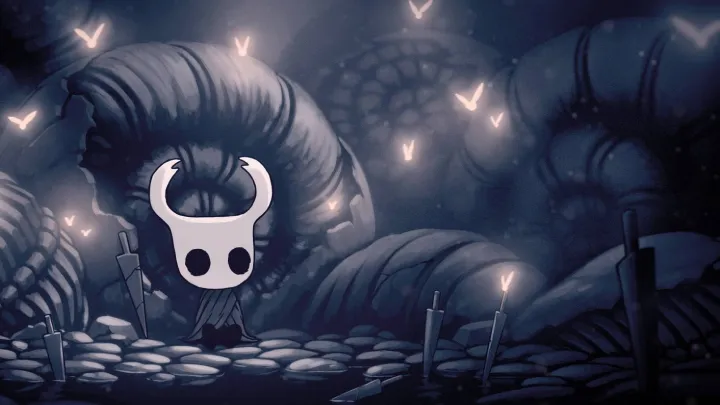
The Design Philosophy of Isolation
At the heart of Hollow Knight lies a commitment to player vulnerability. In most modern open-world games, the map is a utility: a checklist of icons, fast-travel points, and objectives that strip away the mystery of the environment. Team Cherry, the developers, consciously rejected this. By removing the map at the start of every new area, they force the player to engage with the environment on a primal level. You are not a tourist with a guidebook; you are an intruder in a hostile, forgotten tomb.
This isolation is not accidental; it is the game's primary tool for building atmosphere. When you enter the Greenpath or the Deepnest without a map, your senses are heightened. You listen for the hum of the bench, the rustle of enemies, and the visual cues of the architecture. The lack of a map creates a "cognitive load" that forces you to memorize landmarks, essentially turning the act of navigation into a survival mechanic.
The Cornifer Mechanic: Earning Your Way
The introduction of Cornifer the Cartographer is a stroke of genius that bridges the gap between frustration and reward. By making the map a physical item you must purchase—and by hiding the map-maker himself in obscure, often dangerous corners of the map—the game turns the basic utility of navigation into a quest. You are not just buying a map; you are finding the person who is brave enough to chart the abyss.
The Psychological Reward
- The Relief: Hearing Cornifer’s humming in the distance is one of the most satisfying moments in the game. It signals safety and progress.
- The Investment: Because you have to find him, you value the map more. It becomes a tangible artifact of your survival rather than a default UI element.
The Bench System: Stakes and Checkpoints
The "Bench" system is the second half of this navigational equation. In Hollow Knight, benches serve as your save points, your rest areas, and, crucially, your map update stations. You cannot update your map unless you sit at a bench. This creates a rhythmic loop of exploration: venture out, get lost, find a bench, and only then solidify your understanding of the world.
This system creates a "tension-and-release" cycle. The further you venture from a bench, the higher the stakes. If you die, you lose your currency (Geo) and must return to the spot of your death. This makes every step away from the bench a calculated risk, turning the map itself into a resource that you must protect.
The "Lost" Experience: When Navigation Fails
There is a specific point in the early game—often in the Fungal Wastes or the Deepnest—where the player’s frustration peaks. This is the "Lost Experience." It is the moment where the player feels the game is being unfair, where the lack of a map feels like a design flaw rather than a design choice. This is where many players consider quitting.
The Anatomy of Frustration
- Lack of Direction: Without a quest marker, the player often wanders in circles, re-fighting enemies they have already defeated.
- Resource Depletion: As health and soul dwindle, the lack of a known path to safety creates a panic response that often leads to reckless play and death.
The Role of Visual Landmarks
To mitigate the frustration of being lost, Team Cherry utilized brilliant environmental storytelling. Every room in Hallownest is distinct. You don't need a map to know you are in the City of Tears because the rain, the architecture, and the color palette are unique. The game teaches you to navigate by sight, sound, and "vibe" rather than by coordinates.
The Architecture of Memory
- Color Coding: Each biome has a dominant color scheme (e.g., Greenpath is lush green, Crystal Peak is jagged purple/pink).
- Audio Cues: The music changes subtly as you move between sub-areas, providing an auditory map that guides the player even when the visual map is blank.
The Deepnest: A Case Study in Disorientation
Deepnest is the ultimate test of the game’s navigation philosophy. It is a biome designed to be confusing, dark, and claustrophobic. There are no clear paths, the map is hidden behind a difficult platforming section, and the enemies are designed to ambush you from the shadows.
This area is the "final boss" of the navigation system. By the time you reach Deepnest, the game assumes you have mastered the art of observation. If you are still relying on the map as a crutch, Deepnest will break you. It forces the player to abandon the desire for a "clear path" and instead embrace the chaos of the environment.
The "Wayward Compass" Compromise
Recognizing that some players would find the navigation too punishing, the developers included the "Wayward Compass" charm. This is a brilliant, albeit subtle, nod to player accessibility. It takes up a charm slot—a precious resource—to show your position on the map.
This creates a meaningful trade-off: do you want to be stronger in combat (by using combat charms), or do you want to be more aware of your surroundings (by using the compass)? It allows the player to choose their own difficulty level regarding navigation. It is a perfect example of "optional accessibility" that doesn't compromise the game's core vision.
The Metroidvania Roots: Why It Works
Hollow Knight is a modern classic of the Metroidvania genre, a genre defined by backtracking and non-linear exploration. The navigation system is not just a hurdle; it is the core of the genre's appeal. The joy of a Metroidvania is the "Aha!" moment when you unlock a shortcut that connects two previously disparate areas.
The Shortcut Mechanics
- The Loop: You spend an hour lost in a cave, only to find a lever that opens a door back to the starting area.
- The Mastery: This connection transforms the map in your mind. You are no longer just a player in a room; you are a cartographer understanding the anatomy of the kingdom.
The Criticism: Is It Too Much?
Despite the praise, the navigation system is not without valid criticism. For players with limited time, or those who struggle with spatial reasoning, the game can feel disrespectful of their time. The lack of a "breadcrumb" system or a more robust fast-travel network (the Stag Stations are limited) can lead to tedious backtracking that feels like padding rather than exploration.
Is it a flaw? Perhaps. But it is a flaw that is inextricably linked to the game's identity. If you remove the tension of being lost, you remove the triumph of finding your way. The game demands a level of patience that is rare in modern gaming, and while that alienates some, it creates an unparalleled sense of ownership for those who persevere.
Conclusion: The Map is the Journey
The navigation system in Hollow Knight is a masterclass in game design because it treats the player as an intelligent participant in the world. It refuses to hold your hand, not out of malice, but out of respect for the journey. The frustration of being lost is the necessary price for the elation of discovery. When you finally fill in the last corner of the map, you realize that you haven't just cleared a level; you have learned the geography of a kingdom. You have become a part of Hallownest, and that is a feeling that no minimap or quest marker could ever provide. The silence of the map is not a void; it is a canvas upon which the player paints their own experience.
Summary: Hollow Knight's restrictive map system creates a "navigation vs. discovery" paradox, using disorientation to deepen immersion and reward player patience.