




Introduction
Stranded: Alien Dawn is a deep survival and colony-management game that blends base building, character simulation, and environmental storytelling. Players guide a small group of survivors stranded on an alien planet, where every decision—from crop placement to combat tactics—can determine whether the colony thrives or collapses. Unlike traditional colony builders, the game emphasizes individual survivor behavior, emotional states, and long-term planning under unpredictable threats.
This guide focuses on practical tips and strategies to help you survive longer, stabilize your colony, and adapt to the game’s dynamic systems. Whether you are struggling with early food shortages, constant insect attacks, or survivor mental breakdowns, these tips and guides will help you build a resilient settlement and avoid common mistakes.
Understanding Survivor Traits and Personalities
Each survivor in Stranded: Alien Dawn has unique traits, skills, and personality quirks that significantly impact gameplay. These traits affect work speed, stress tolerance, combat effectiveness, and social interactions.
Instead of treating survivors as interchangeable workers, you should assign tasks based on strengths and weaknesses. A survivor who dislikes physical labor will become stressed quickly if forced into constant hauling or construction, while a skilled researcher can dramatically accelerate technological progress.
Pay close attention to negative traits early on. Some flaws are manageable, but others—such as frequent panic or poor combat ability—can become serious liabilities during crises.
Choosing the Right Starting Location
Your initial landing zone shapes the entire run. Terrain, nearby resources, and environmental threats all influence how difficult the early game will be.
An ideal starting location offers:
- Flat land for construction
- Nearby water sources
- Accessible wild food
- Natural chokepoints for defense
Avoid areas surrounded by aggressive wildlife or constant weather hazards. A safe start allows you to focus on building infrastructure instead of constantly reacting to emergencies.
Early Game Priorities and Base Layout
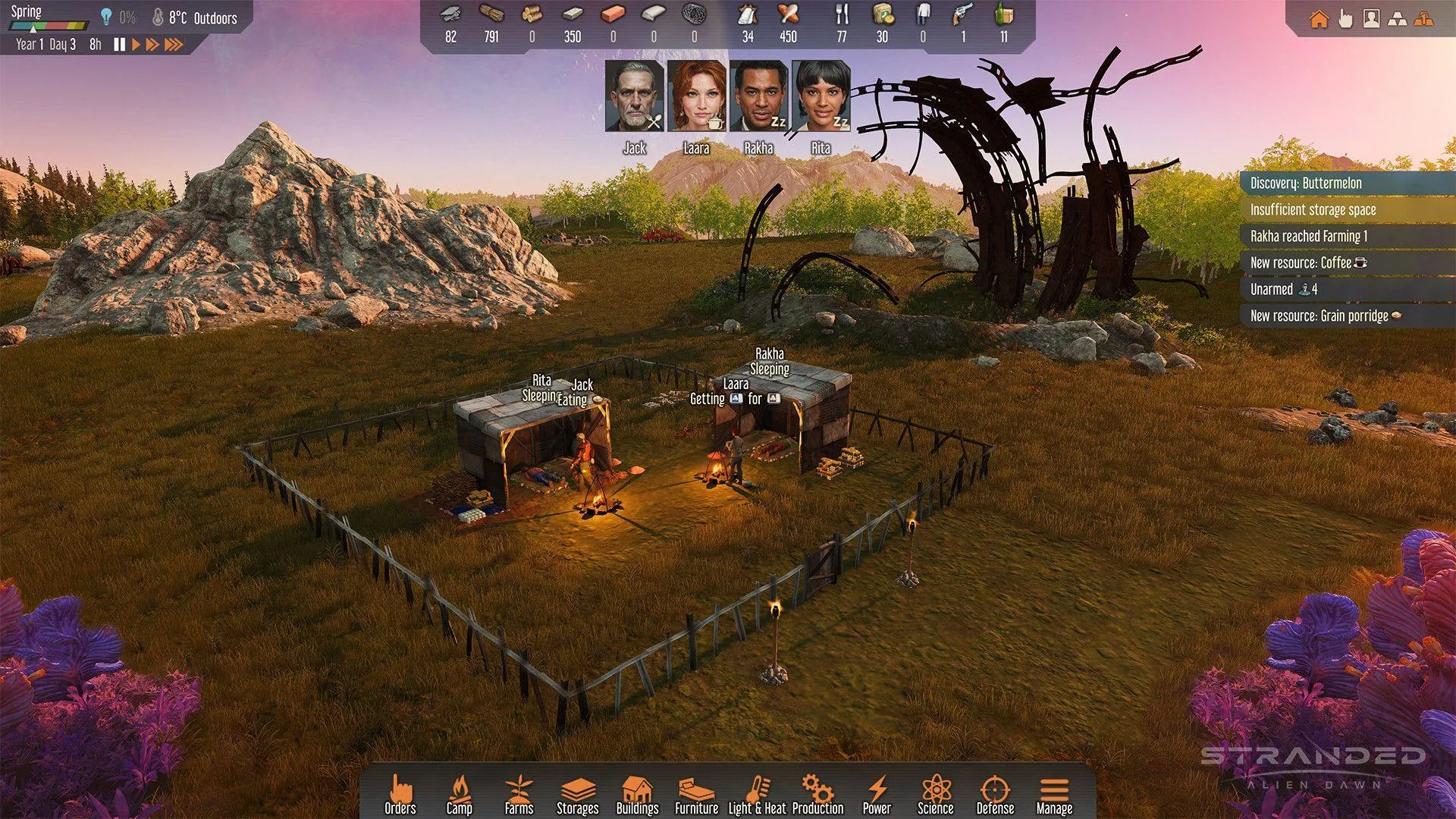
The early phase is about survival and stability, not efficiency or beauty. Many new players fail by expanding too quickly or building unnecessary structures.
Your first priorities should include:
- Basic shelter for all survivors
- A food source that does not rely solely on scavenging
- Storage to prevent item decay
Keep buildings close together early on to reduce travel time and exhaustion. A compact base is easier to defend and manage before automation and defenses are unlocked.
Food Production and Long-Term Sustainability
Food shortages are one of the most common causes of colony failure. Relying too heavily on hunting or scavenging is risky due to weather and wildlife behavior.
Establish farming as early as possible, even if yields are low at first. Crop rotation and soil quality matter more than sheer farm size. Balance plant-based food with animal products to avoid nutrition penalties.
Overproducing food can also be a mistake, as spoilage wastes time and labor. Aim for consistency rather than excess.
Managing Survivor Stress and Mental Health
Survivor mental health is just as important as physical survival. Stress builds up from exhaustion, injuries, poor living conditions, and fear.
To manage stress effectively:
- Ensure survivors have beds and shelter
- Rotate demanding tasks
- Provide downtime and recreation
Ignoring stress leads to breakdowns, work refusal, and dangerous mistakes. A mentally stable colony works faster and survives longer.
Research Strategy and Technology Progression
Research unlocks crucial tools, weapons, and quality-of-life upgrades. However, research speed depends heavily on survivor skill and environmental conditions.
Focus early research on:
- Improved food processing
- Defensive structures
- Medical upgrades
Avoid chasing advanced technologies too early. A slow but steady research pace is safer than rushing into systems your colony cannot support yet.
Combat Preparation and Defensive Planning
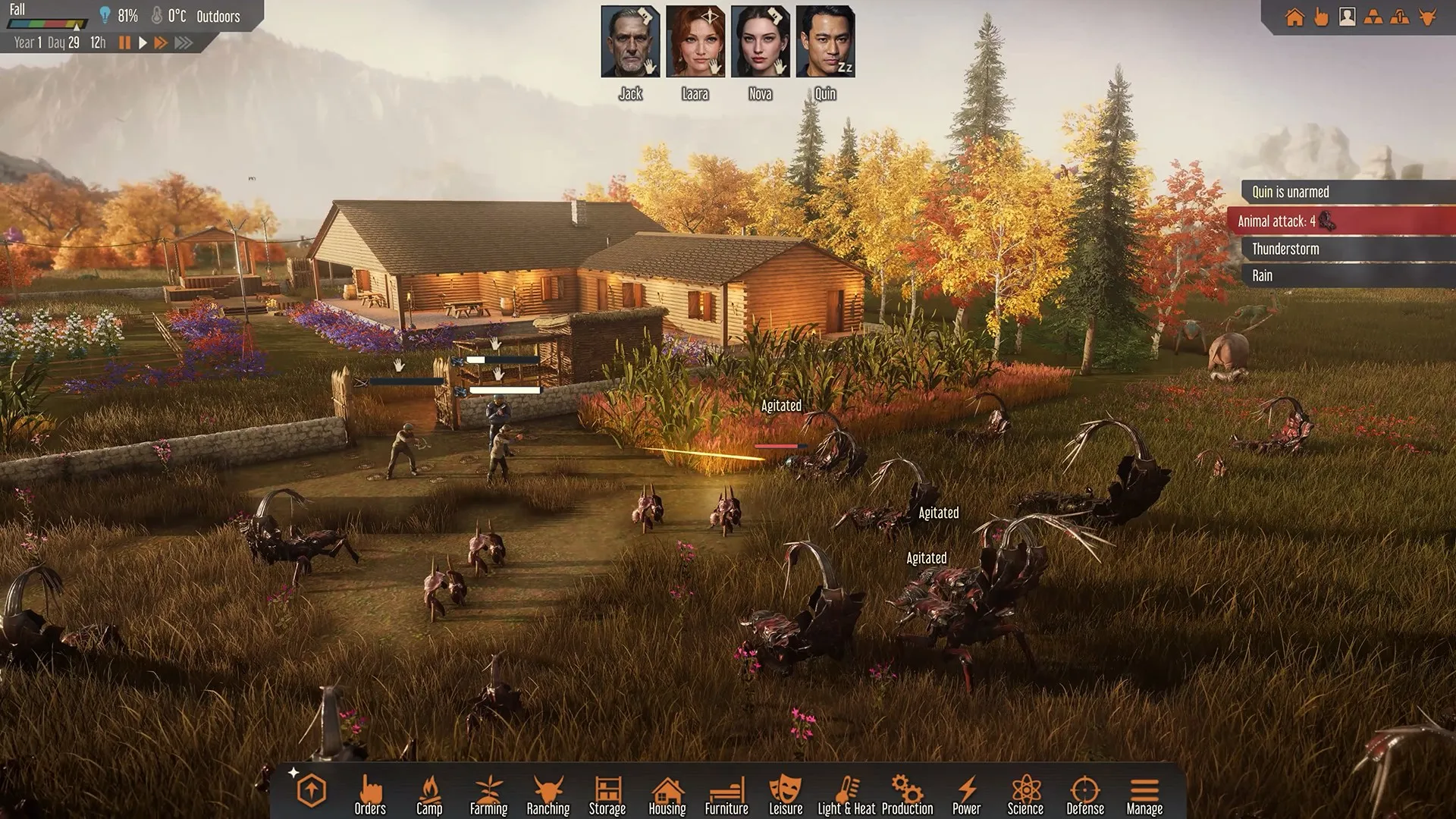
Combat in Stranded: Alien Dawn is unforgiving. Wildlife attacks and alien threats escalate over time, and unprepared colonies are quickly overwhelmed.
Defensive planning should include:
- Clear firing lines
- Walls and chokepoints
- Survivors trained with ranged weapons
Do not wait for the first major attack to build defenses. Even basic fortifications can dramatically reduce casualties and panic during combat.
Weather, Seasons, and Environmental Hazards
The alien planet is not static. Weather events, temperature shifts, and seasonal changes all impact survivor efficiency and safety.
Prepare for harsh conditions by:
- Stockpiling resources before extreme seasons
- Building insulated structures
- Adjusting work schedules
Ignoring environmental warnings often leads to sudden food loss or survivor injuries. Planning ahead reduces emergency micromanagement.
Resource Management and Production Balance
Every resource in Stranded: Alien Dawn has multiple uses, and mismanagement can cripple progress. Overproducing one material often leads to shortages elsewhere.
Maintain balance by:
- Monitoring stockpiles regularly
- Limiting unnecessary crafting
- Assigning hauling priorities
Efficient resource flow reduces survivor fatigue and ensures critical systems stay operational during emergencies.
Late Game Expansion and Colony Optimization
As your colony stabilizes, the focus shifts toward efficiency, security, and long-term survival. This is where thoughtful expansion matters most.
Late-game strategies include:
- Specialized work zones
- Automated production chains
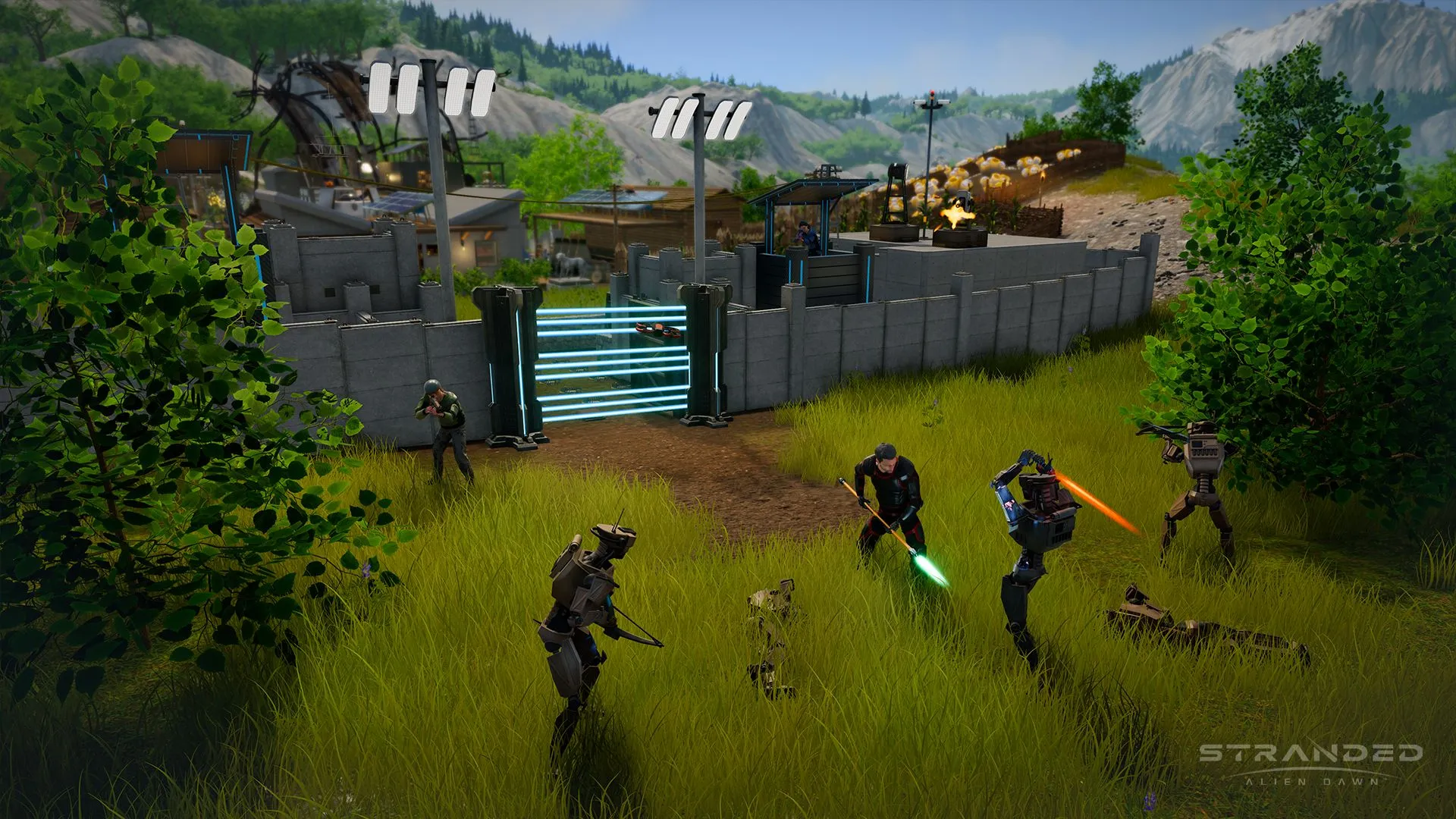
- Strong perimeter defenses
Avoid complacency. The game continuously increases pressure, and even advanced colonies can fall apart if maintenance and morale are neglected.
Conclusion
Stranded: Alien Dawn is a survival game that rewards careful planning, adaptability, and respect for its complex systems. Success comes not from rapid expansion, but from understanding survivor behavior, managing stress, and preparing for inevitable threats. Every system—from farming to combat—interconnects, meaning small mistakes can snowball into disaster if left unchecked.
By focusing on strong early foundations, balanced resource management, mental health care, and proactive defense planning, you can transform a fragile group of castaways into a self-sustaining colony. With patience and smart decision-making, even the harshest alien worlds become survivable.
160-character Summary
A complete Stranded: Alien Dawn guide covering survivor traits, base layout, food systems, combat strategy, and long-term colony survival.