.webp)








Introduction
Assetto Corsa EVO is widely praised for its physics engine, laser‑scanned tracks, and commitment to realism. Yet beneath its technical excellence lies a specific issue that has become one of the most debated topics among sim racers: the Force Feedback Translation Problem. This issue refers to the gap between the physics engine’s internal tire and chassis data and what the player actually feels through their steering wheel.
While the game simulates an enormous amount of detail — slip angles, tire deformation, suspension load, micro‑bumps, and chassis flex — not all of this information reaches the wheel in a clear, consistent, or intuitive way. This article explores the problem in depth, analyzing how it emerges, evolves, and affects gameplay across different stages of player experience.
1. The Foundation of the Force Feedback Translation Problem
The Force Feedback Translation Problem begins with the way Assetto Corsa EVO processes physics data. The game calculates tire forces, suspension compression, weight transfer, and road surface detail at extremely high frequency. However, the steering wheel can only output a simplified version of this data.
This creates a bottleneck: the physics engine knows more than the wheel can express. As a result, players often feel that the wheel is “muted,” “over‑filtered,” or “not communicating enough.” The issue is not that the physics are wrong — it’s that the translation layer between physics and wheel output is imperfect.
Core Causes
- High‑resolution physics vs limited FFB bandwidth
- Filtering layers that smooth out detail
- Hardware differences between wheel bases
Why It Matters
Force feedback is the player’s primary sensory connection to the car. If it’s unclear, the entire driving experience suffers.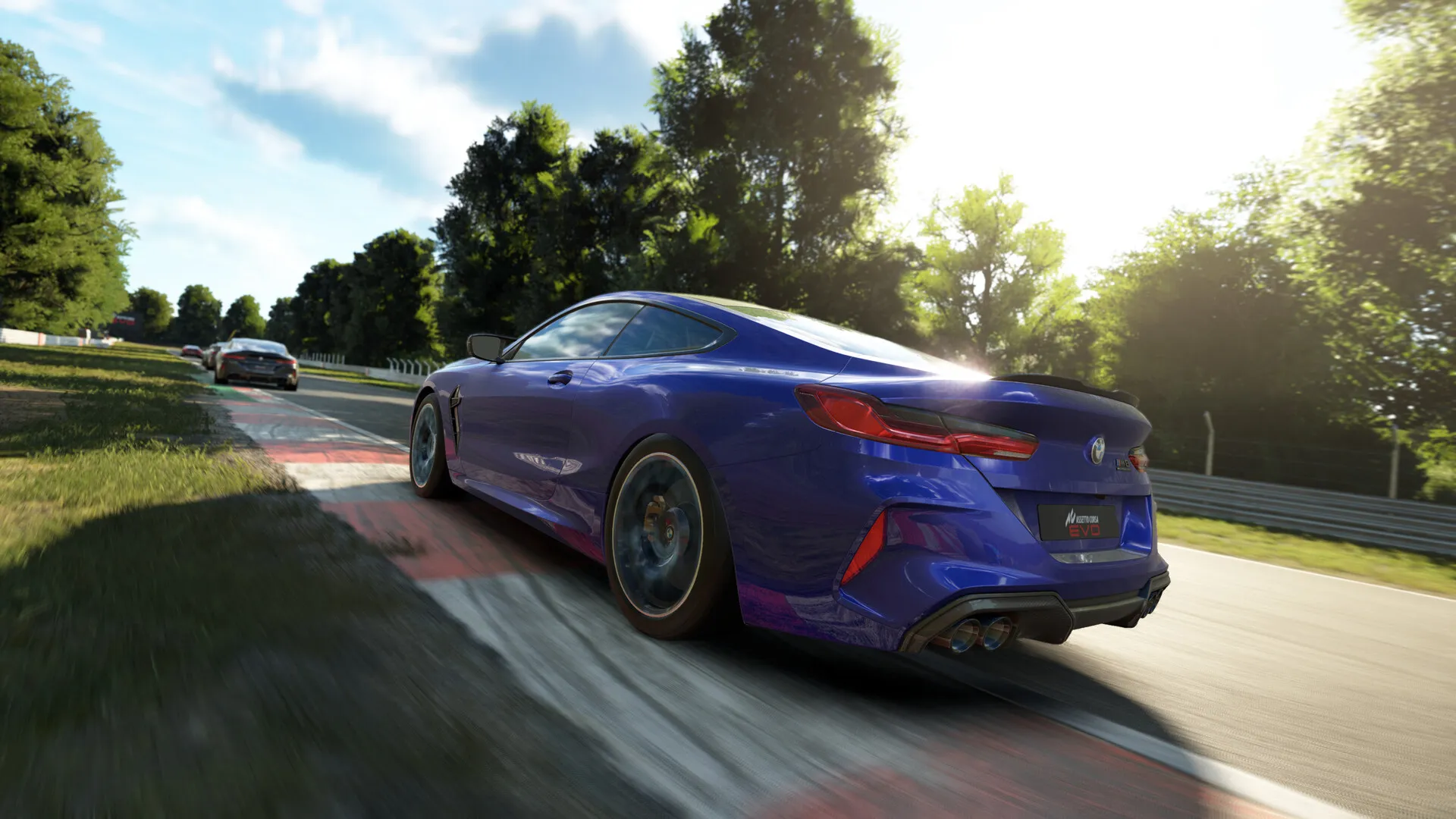
2. Early‑Game Confusion: When Players First Encounter the Issue
New players often struggle to understand why the wheel feels different from other sims. They expect Assetto Corsa EVO to feel like its predecessor or like competing titles, but the FFB translation system behaves differently. The wheel may feel too light, too smooth, or too vague during corner entry.
This early confusion leads to frustration. Players may think their wheel is broken, their settings are wrong, or the game is unfinished. In reality, they are experiencing the early symptoms of the Force Feedback Translation Problem — the disconnect between physics detail and wheel output.
Common Beginner Complaints
- “I can’t feel the front tires.”
- “The wheel feels numb on center.”
- “I don’t know when the car is losing grip.”
The Learning Curve
Understanding that the issue is systemic — not user error — is the first step toward mastering the game.
3. Mid‑Game Awareness: Recognizing the True Nature of the Problem
As players gain experience, they begin to notice patterns. They realize that the wheel communicates some information very well — such as heavy braking or curb impacts — but struggles with subtle cues like micro‑slip, understeer onset, or weight transfer.
This is when players recognize that the issue is not a lack of force, but a lack of clarity. The wheel outputs strong signals, but the nuanced ones get lost in translation. This mid‑game awareness marks a turning point: players start adjusting settings, experimenting with filters, and comparing wheel bases.
Signs of Mid‑Game Awareness
- Players begin tweaking FFB settings extensively
- Players compare EVO’s FFB to other sims
- Players start noticing missing micro‑details
The Shift in Mindset
The problem becomes a technical challenge rather than a mystery.
4. How the Physics Engine Contributes to the Issue
Assetto Corsa EVO’s physics engine is extremely detailed. It simulates tire carcass flex, heat buildup, dynamic grip, and suspension geometry with high precision. However, this complexity creates a paradox: the more detailed the physics, the harder it is to translate them into simple force feedback signals.
The physics engine outputs dozens of variables per millisecond, but the wheel can only output a single force vector. This means the game must choose which information to prioritize. Often, the game prioritizes stability and smoothness over raw detail, which contributes to the muted feeling.
Physics Factors That Affect FFB
- Tire slip angle
- Vertical load
- Lateral load
- Suspension compression
- Road texture
The Translation Bottleneck
The wheel cannot express all physics variables simultaneously, forcing the game to simplify.
5. How Wheel Hardware Amplifies the Problem
Different wheel bases interpret FFB signals differently. Direct‑drive wheels amplify subtle details, while belt‑driven wheels smooth them out. Gear‑driven wheels add mechanical noise that masks micro‑feedback. This hardware variability makes the Force Feedback Translation Problem worse.
Players with high‑end wheels may feel that EVO’s FFB is too soft or filtered. Players with mid‑range wheels may feel that the game lacks detail entirely. The same FFB signal can feel completely different depending on the hardware.
Hardware‑Dependent Symptoms
- Direct‑drive: too smooth, lacking texture
- Belt‑drive: muted mid‑corner detail
- Gear‑drive: noisy but unclear
Why Hardware Matters
The FFB translation layer must work for all wheel types, which forces compromises.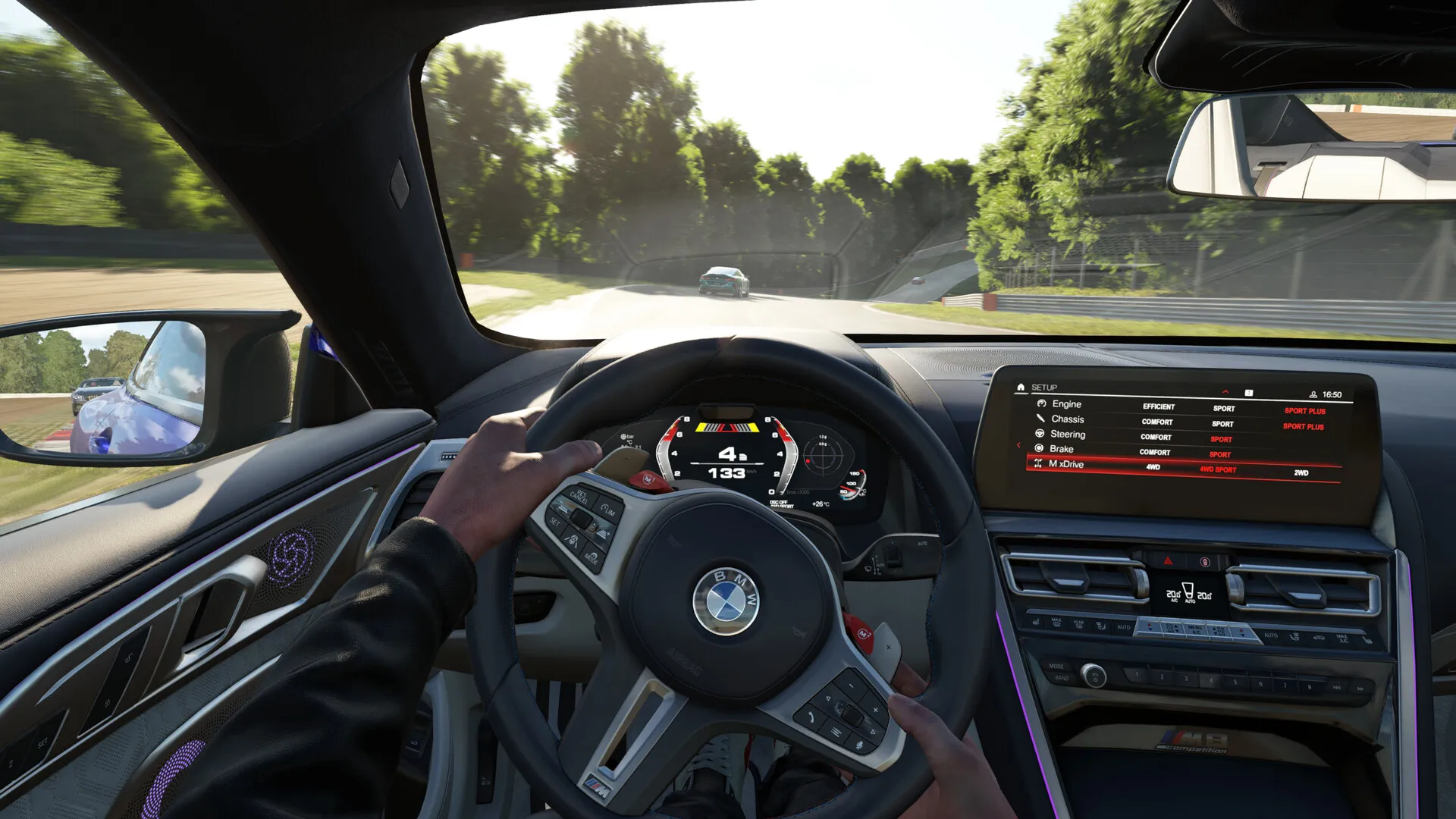
6. The Role of Filtering and Signal Processing
Assetto Corsa EVO uses several layers of filtering to prevent oscillation, clipping, and noise. These filters smooth out the FFB signal, making the wheel feel stable and predictable. However, they also remove micro‑details that players rely on for car control.
Filtering is necessary — without it, the wheel would shake violently on straights or clip during heavy braking. But excessive filtering creates the sensation of “driving on ice,” where the wheel feels disconnected from the road.
Types of Filters
- Low‑pass filters
- Damping filters
- Inertia filters
- Road noise filters
The Filtering Paradox
Filters improve stability but reduce detail — a core part of the FFB translation problem.
7. How the Problem Affects Driving Technique
The Force Feedback Translation Problem affects more than immersion — it affects driving technique. Without clear feedback, players struggle to judge grip levels, modulate steering input, or catch slides. This leads to inconsistent lap times and difficulty mastering high‑speed corners.
Players often compensate by relying more on visual cues, audio cues, or telemetry overlays. While these tools help, they cannot fully replace tactile feedback. The lack of clear FFB forces players to adopt a different driving style than in other sims.
Driving Challenges
- Harder to detect understeer
- Harder to feel oversteer onset
- Harder to judge mid‑corner balance
Technique Adaptation
Players must learn to “read” the car through alternative cues, which increases the learning curve.
8. Community Workarounds and Player Solutions
The community has developed numerous workarounds to mitigate the FFB translation problem. These include custom LUTs, third‑party FFB tools, modified settings, and wheel‑specific tuning guides. While these solutions help, they are not perfect.
Some players increase road noise to simulate missing micro‑detail. Others reduce damping to increase responsiveness. Direct‑drive users often rely on custom profiles to extract more texture from the signal. These workarounds show how deeply players care about the issue — and how much effort they invest in solving it.
Common Workarounds
- Custom FFB LUTs
- Third‑party FFB filters
- Wheel‑specific tuning profiles
- Increased road detail settings
Limitations
Workarounds improve clarity but cannot fix the underlying translation bottleneck.
9. Competitive Implications: How the Issue Affects High‑Level Racing
In competitive racing, the Force Feedback Translation Problem becomes even more significant. High‑level drivers rely on micro‑feedback to push the car to its limits. Missing or unclear feedback reduces confidence, increases mistakes, and affects consistency.
Some competitive players adapt by memorizing car behavior rather than relying on tactile cues. Others switch to wheel bases that better interpret EVO’s FFB signal. The issue creates a skill gap between players who can adapt and those who cannot.
Competitive Challenges
- Reduced confidence in high‑speed corners
- Difficulty catching slides
- Inconsistent lap times
The Competitive Divide
Players who master alternative cues gain an advantage over those who rely heavily on FFB .
.
10. The Future of Force Feedback in Assetto Corsa EVO
The Force Feedback Translation Problem is not unsolvable. Future updates could refine the translation layer, improve filtering algorithms, or provide more granular FFB customization. Developers could also introduce wheel‑specific profiles to optimize signal output for different hardware types.
The community hopes for a more transparent FFB system that exposes more physics data directly to the wheel. While this may increase noise, it would also increase clarity — giving players the tactile information they need to drive confidently.
Potential Improvements
- More detailed FFB sliders
- Wheel‑specific tuning presets
- Reduced filtering or optional raw mode
- Improved physics‑to‑FFB mapping
A Promising Future
With thoughtful refinement, Assetto Corsa EVO can deliver the most realistic FFB experience in sim racing.
Conclusion
The Force Feedback Translation Problem in Assetto Corsa EVO is a complex issue rooted in physics detail, hardware variability, and signal filtering. While the game’s physics engine is incredibly advanced, the translation of that data into tactile feedback remains imperfect. This affects immersion, driving technique, and competitive performance.
Yet the issue also highlights the passion of the sim racing community, which continues to develop workarounds and push for improvements. With future updates and better tuning tools, Assetto Corsa EVO has the potential to overcome this challenge and deliver the most authentic driving experience possible.